
Perhaps you have seen a neck wrap being used in a CAMELIDynamics demonstration and wondered what it is—or why wrapping an alpaca or llama’s neck might make a difference.
The CAMELIDynamics neck wrap is a simple handling tool designed to help an animal feel steadier and more balanced. It can be especially helpful during haltering, oral medication, medical care and other situations in which an alpaca or llama feels nervous or unsettled. It is not a restraint, and it does not replace good handling skills. Think of it as one more way to help the animal’s nervous system and body cope with what we are asking.
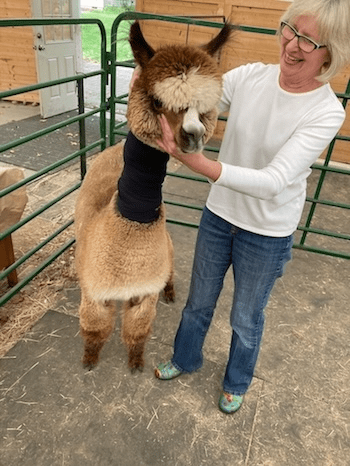
Why wrap the neck?
Llamas and alpacas are often sensitive about anything touching their bodies, particularly their legs. This can make it difficult to introduce a body wrap to an animal that is already worried.
The neck is usually much easier to access. A wrap can be placed there quietly and safely without creating a great deal of fuss.
The long camelid neck also presents a challenge during handling. When the neck and head are moving rapidly, it can be difficult for the animal to find balance. The neck wrap provides gentle, even contact around the neck and can help the animal feel more stable.
I have found the neck wrap especially useful for tasks involving the head, including haltering and giving oral medication.
What can a neck wrap help with?
A neck wrap may be useful when an alpaca or llama:
- finds haltering difficult
- moves the head and neck constantly during handling
- kushes when you need the animal to remain standing
- kicks during necessary care
- becomes unsettled during medical treatment
- needs oral medication
- has difficulty finding physical balance
- becomes nervous when touched or handled
Over the years, I have used neck wraps on animals in many parts of the world, including animals that had never experienced one before. The response is often surprisingly positive and, in some cases, quite dramatic.
Of course, no tool will solve every problem. The neck wrap works best as part of a thoughtful handling plan that includes an appropriate catch pen, good handler position, clear antecedent arrangements and the least amount of restraint necessary.
How to put on the camelid neck wrap
The neck wrap is designed to be straightforward to use. Before approaching the animal, prepare the wrap so that you are not trying to organize it while the animal waits.
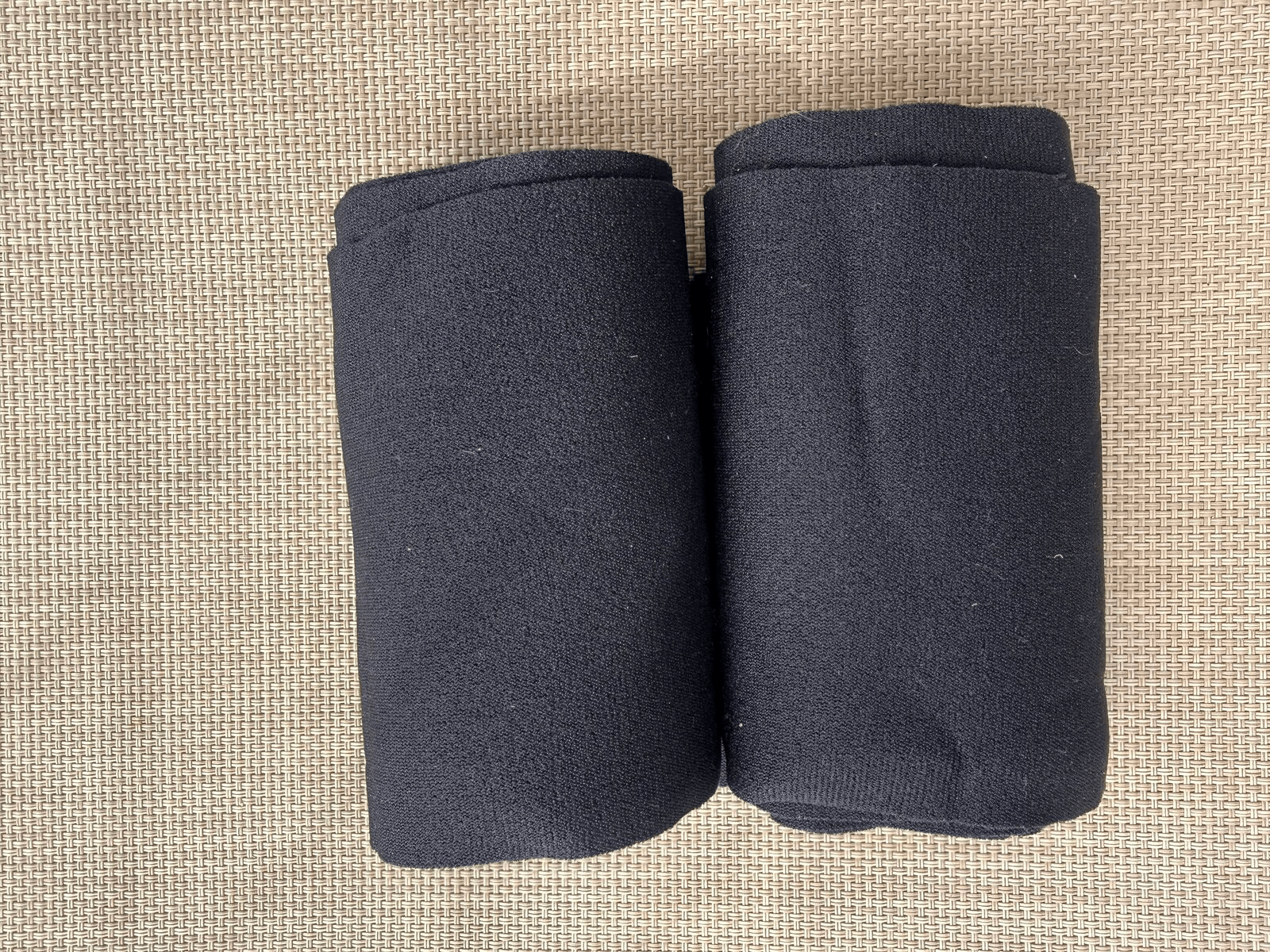
Step 1: Roll both ends toward the center
Roll each end inward until you have one roll in each hand. This keeps the material controlled and prevents it from dangling near the animal’s legs.
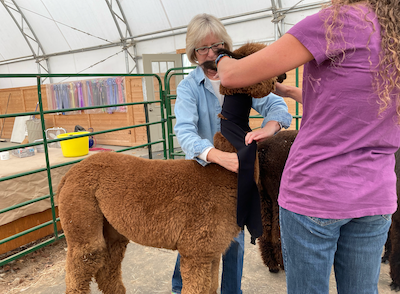
Step 2: Begin at the base of the neck
With the assistance of another handler who is balancing the animal using the bracelet, place the center of the wrap at the base of the neck and begin working upward.
Step 3: Continue toward the ears
Wrap evenly around the neck, watching the spacing as you go. The aim is to finish as high on the neck as possible, just below the ears.
On a larger llama or alpaca, there may be more space between each wrap turn. That is perfectly acceptable and does not reduce its usefulness.

Step 4: Fasten the buckle
Snap the fastex buckle into place. There is no need to pull, cinch or make the wrap tight.
Snug, never tight
This is the most important fitting instruction. The wrap should feel snug enough to provide consistent contact, but it must never be tight.
You are not trying to restrict the animal’s neck or hold the animal in place. The purpose is to provide gentle sensory information and support.
Check that the animal can breathe, swallow and move normally. Stay with the animal while the wrap is being used, and remove it when the handling session is finished.
Removing the wrap safely
Removal deserves just as much attention as putting the wrap on.
Keep both ends in your hands as you unwind it. Do not allow the material to fall or dangle around the animal’s front legs. A loose end suddenly brushing a leg may startle the animal and undo the calm work you have just accomplished. Move slowly, keep the wrap organized, and let the animal know where you are.
The neck wrap and the bracelet
In CAMELIDynamics, I often use the neck wrap together with a balancing technique called the bracelet.
The bracelet is not about squeezing the neck or holding the animal tightly. It is a way of using your hand and arm position to help control balance while supporting the animal. In the photographs in this article, the handler is using the bracelet while the alpaca wears the neck wrap. The two techniques work together, but they have different jobs.
The wrap provides steady contact around the neck. The handler uses balance, position and skilled contact to help the animal remain organized.
Equipment is only part of the equation. A skilled handler must still understand where to stand, when to release pressure and how to recognize the earliest signs of worry.
Where did the idea come from?
The neck wrap was inspired by TTouch, which uses different kinds of body wraps with many animal species. Wraps may be used to provide sensory information and help an animal become more aware of its body.
I adapted the idea specifically for llamas and alpacas. Their long necks, prey-animal behavior and sensitivity to touch make the neck wrap especially useful in camelid handling.
It is a very simple tool, but simple does not mean insignificant.
Sometimes a small change in how the animal feels can create a very big change in what the animal can do.