
Catching an alpaca or llama does not have to involve chasing, cornering or holding on with all your strength. The midline catch is a CAMELIDynamics technique that uses body position and balance to help you calmly catch and handle an animal. Instead of preventing the animal from moving, you provide an escape route and move with them. You then use light contact at specific points around the neck and head to influence their balance. The result is a catch that is calmer for the animal and safer for the handler.
In a perfect world, we would have time to prepare every animal fully for human touch and handling. In the real world, owners may need to work with young animals, newly purchased animals, large herds or individuals with very little handling experience. The midline catch was developed for that real world.
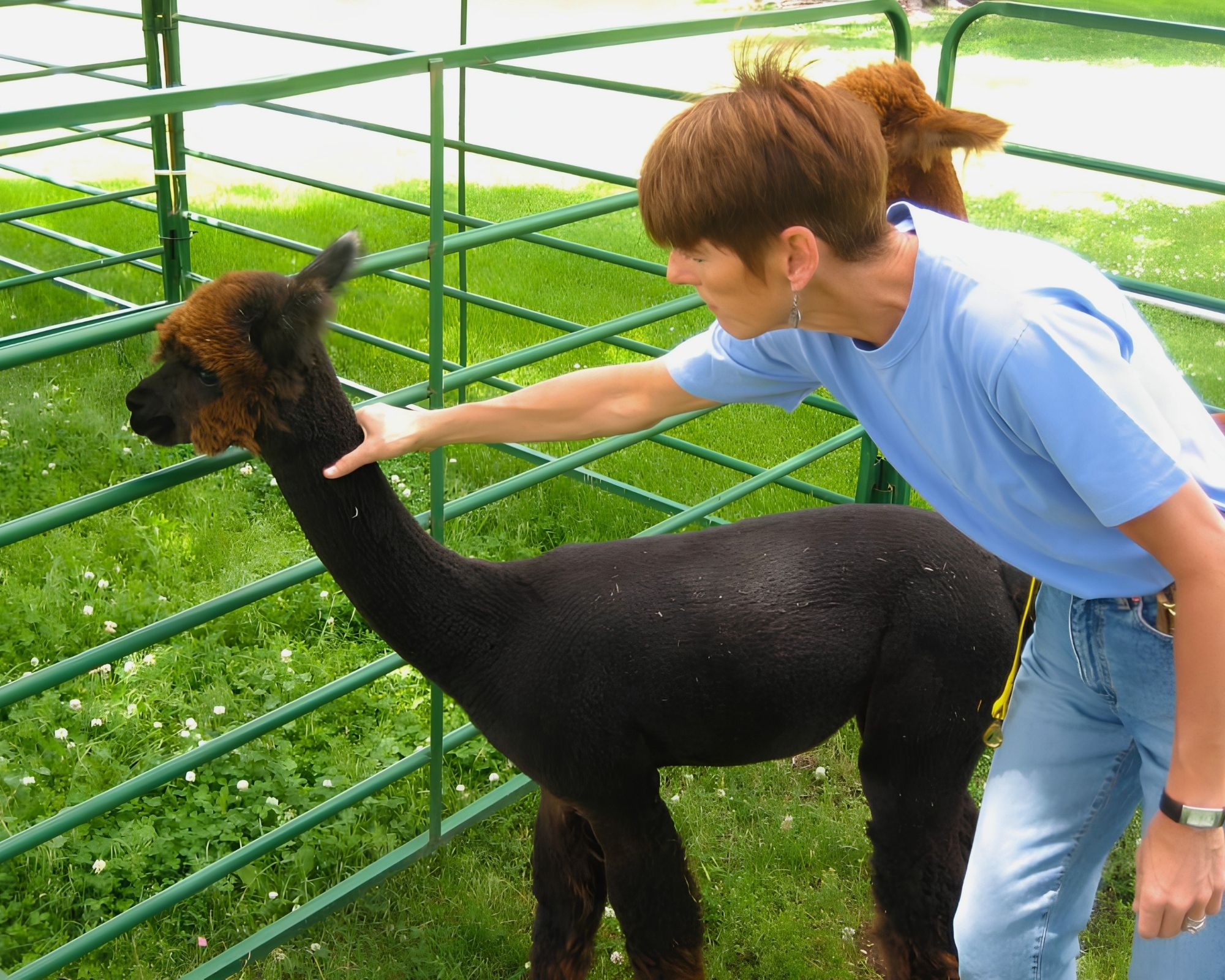
What is the midline catch?
The midline catch is a way to catch and balance an alpaca or llama without grabbing, restraining, or wrestling with them.
The handler approaches from behind the animal’s eye, makes calm contact around the middle of the neck and gradually brings their hands into positions that help balance the head.
Your hands are not clamps. They create supporting surfaces that help guide the animal’s balance and direction.
The animal is also allowed to continue moving forward. You stay with them rather than trying to stop them suddenly. This distinction is important. A frightened camelid will usually resist harder when it feels trapped or physically overpowered. The midline catch works because it does not begin with restraint.
When can the midline catch be used?
The midline catch is particularly helpful when:
- an alpaca or llama has had little previous handling
- you are working with young or newly purchased animals
- you need to handle several animals in a large herd
- a routine husbandry task does not require a halter
- you are preparing an animal to accept a halter
- you want to move from using a wand and rope to a direct, low-threat catch
It can also be used with experienced animals. Once they understand your approach, the midline catch remains a quiet and effective way to begin a handling session.
Why does the midline catch work?
The midline catch works with the animal’s balance rather than against it.
The handler is not trying to hold the animal still or prevent all movement. That means the animal does not learn to throw its body weight against your arm and pull you off balance.
Camelids are more likely to panic when they believe they have been trapped. Allowing the animal to move forward reduces the need to struggle.
You control the shape and direction of the movement without completely blocking it.
A chase-and-grab approach often teaches an animal to avoid people more effectively next time. A well-executed midline catch should have the opposite effect. As the animal gains experience with calm approaches, balanced contact and timely release, catching can become easier.
From the midline catch, the handler can move into the bracelet, a CAMELIDynamics balancing technique used for husbandry procedures such as toenail trimming and injections. The midline catch can also be the first step toward calmly introducing a halter.
Prepare the catch pen before you begin
The midline catch should be performed in a small catch pen. A pen measuring approximately 9 × 9 feet (2.7 × 2.7 metres) is ideal.
It is often easier to work with several animals in the pen than to isolate one animal completely. Around five or six animals in a pen of this size can provide the social support camelids need while still giving the handler enough room to work.
Catching begins before you touch the animal. Before entering the pen, take a moment to observe:
- Where is the animal likely to move?
- Can you create a clear forward escape route?
- Are you able to approach without driving the animal into a corner?
- Is your own body relaxed and balanced?
How to perform the midline catch: step-by-step guide

Step 1: Create the escape route
Use your position to encourage the animal into a counterclockwise path.
Approach from the rear with your body reasonably close to the animal. You do not want to reach from a distance or make a sudden grab.
Your position should suggest where the animal can move next.
Step 2: Make calm first contact
Place your thumb and fingers against the neck, approximately halfway up. Keep your fingers flat. Do not curl them around the neck.This first touch should be calm and matter-of-fact. Speed does not make the catch more effective. Sudden contact is more likely to trigger the animal’s fear response.
Your hand should not reach completely around to the far side of the neck. The animal remains free to move forward along the escape route you have created.

Step 3: Bring your other hand behind the jaw
Place your left hand on the neck immediately behind the jaw.
Keep the hand on the neck, not on the animal’s face or head. Reaching directly for the head can frighten the animal and cause head tossing.
Once both hands are in contact, slide your right hand upward until it rests behind the ears. You are not gripping the animal.
Let the animal walk forward. Stay close and move with them.

Step 4: Balance the head
Raise your left elbow and slide your left hand forward into the groove behind the animal’s lower lip. Keep your elbows light and your own weight centered over your feet.
Think of the head as a plate balanced on a stick. You are supporting and directing its balance, not holding it tightly. From this position, small changes in the surfaces created by your hands and arms can help guide the animal’s direction.

Step 5: Cradle and guide – the bracelet
Keep the animal parallel with a panel and keep your body behind their eye. Do not position yourself so that the animal is trapped between your body and the corner of the pen. The animal should still feel that forward movement is available.
At this stage, the alpaca or llama is now balanced without fear and will not learn to use his weight to oppose handling. You can move into another handling technique, begin introducing a halter or add a handler helper. This final step is called “the bracelet”.
What is a handler helper?
The midline catch is the handling technique. The handler helper is a tool that can be added once the animal has been caught and balanced. The handler helper is an adjustable strap that sits high around the neck. It can help the handler maintain the animal’s balance without needing to keep both hands in position.
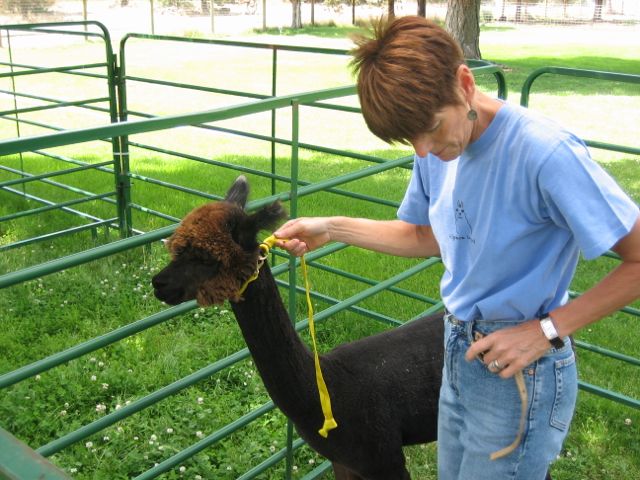
Before beginning, estimate the circumference of the animal’s neck and adjust the distance between the ring and snap so that it is slightly larger than you expect to need. Place the handler helper in a front pocket, leaving the hook end hanging approximately ten inches outside. Once the animal is balanced:
- Take the hook end from your pocket with your right hand.
- Allow it to hang down on the far side of the neck.
- Adjust your left hand so the hook drops into your fingers.
- Bring the two ends together and attach the snap to the ring.
- Position the handler helper toward the top of the neck.
The handler helper should not be used to pull or drag the animal. Its purpose is to assist with balance and provide a point of gentle contact.
Balance, release, and give breaks
Once the handler helper is in place, you have several choices. You may use it to maintain balance while freeing one or both hands for a husbandry procedure. You may move into the bracelet or begin introducing the halter.
You can also release the handler helper completely and allow the animal to take a break. When you are ready to begin again, pick up the free end and quietly re-establish the connection. You should not need to repeat the original catch from the beginning.
These breaks are valuable. Release helps the animal understand that handling is not something they must fight their way out of.
What can the handler helper be used for?
The handler helper can support a variety of routine handling situations, including:
- introducing an alpaca or llama to a halter
- balancing the animal during husbandry
- working with animals that have little handling experience
- giving an animal a complete break without removing the tool
- handling an animal when a halter is unnecessary
The handler helper is useful because it supports the principles of the midline catch. However, it does not replace thoughtful body position, appropriate timing or skilled hands.
Common mistakes to avoid using the midline catch
The midline catch may look simple, but the details matter. Avoid:
- chasing the animal around the pen
- driving the animal into a corner
- reaching suddenly for the head
- putting a hand directly on the face
- gripping the neck or clamping the head
- leaning your body weight onto the animal
- blocking every possible escape route
- using the handler helper to pull
- continuing without offering breaks or release
If the animal begins to struggle, first look at your balance, position, and intention. More force is rarely the answer.
Catching is a skill, not a contest
Good catching is not about proving that you can hold an alpaca or llama still.
It is about understanding how camelids respond to pressure, movement and balance. It is about knowing where to place your body, when to make contact and when to release.
The midline catch gives owners a practical way to catch an alpaca or llama without beginning the interaction with fear or force.
Like any handling skill, it improves with thoughtful practice. The quieter and more precise you become, the easier it is for the animal to understand what you are asking.