
“Stubborn.” “Dominant.” “Friendly.” “Difficult.” “Drama Queen”.
Have you used a label to describe your alpacas or llamas? Labels can feel useful, but they describe what we think is going on, not what the animal is actually doing.
Labels can cause problems because they can:
- give us a false sense that we understand the problem when we have really just given it a name
- create self-fulfilling prophecies that influence how we treat the animal in the future
- follow an animal from one owner to another, trapping the animal in a box not of his own making
- lead us down the wrong path when we try to change the behavior, perpetuating ineffective or unfair handling methods
Learning to describe behavior
Describing what an animal actually does, rather than what we think it means, is called operationalizing behavior. It means using specific, observable actions in place of labels.
Compare these examples:
Label
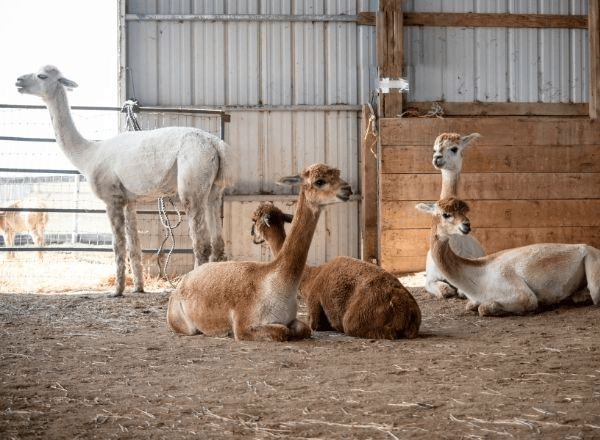
“My alpacas are happy.”
Observable behavior
“My alpacas are sitting or standing quietly and ruminating. They remain where they are when I walk nearby. One stands near the barn door, looking outside.”

Label
“Cinnamon and Toast are dominant.”
Observable behavior
“When my daughter enters the paddock carrying a bucket of feed, Cinnamon and Toast run toward her and stand close to her body.”
The second description gives us something we can observe and investigate. “Dominant” doesn’t tell us what the animals do or what influences their behavior. Describing their actions helps us ask more useful questions: What happened just before they approached? What happened afterward?
Why “dominance” can be misleading
Calling an animal “dominant” can make us feel we have explained its behavior. But the label alone tells us little about the situation. It may also encourage us to think we need to “show the animal who’s boss,” instead of examining what the animal is learning.

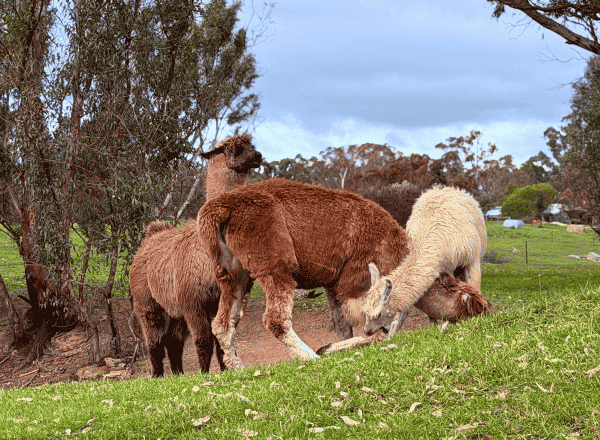
Look at the llamas in these photographs. Are they playing? Is one trying to move the other away? Is it dominance? Who knows? All we can say for sure is that the crias have their heads lowered and their necks crossed, and the adult llamas are biting each other’s legs.
We can describe the contact we see. To understand its purpose, we need to observe the interaction and what happens before and afterwards.
Be careful about what we encourage in young alpacas or llamas
Labels can also obscure how our own actions influence behavior. A “friendly” baby alpaca that runs up and leans against us may seem cute and harmless. But the same behavior can become dangerous when the animal weighs 200 pounds and approaches at full speed.
Encouraging a young camelid to do something that becomes unsafe as it grows has little to do with love or dominance. It is about learning. Young animals learn from every interaction we have with them.
Describing behavior clearly helps us recognize these patterns early—and consider what we want to encourage instead.
The ABC’s of behavior
Animals learn from what happens around them. Something in the environment sets the occasion for a behavior, the animal acts, and an outcome follows. If that outcome serves a useful purpose, the behavior may be more likely to happen again.
The ABC model helps us examine this sequence:
Antecedent
The event or stimulus that happens immediately before the behavior and sets the occasion for it.
Behavior
The observable action the animal performs.
Consequence
What follows the behavior and influences how likely it is to happen again.
Let’s look at how this works with alpacas Cinnamon and Toast.
Antecedent
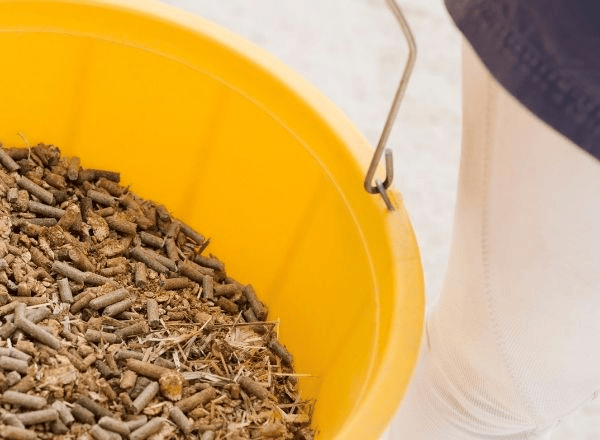
My daughter enters the paddock carrying a bucket of feed.
Behavior
Cinnamon and Toast run toward her and stand close to her body.
Consequence
She quickly puts the bucket down, and the alpacas eat.
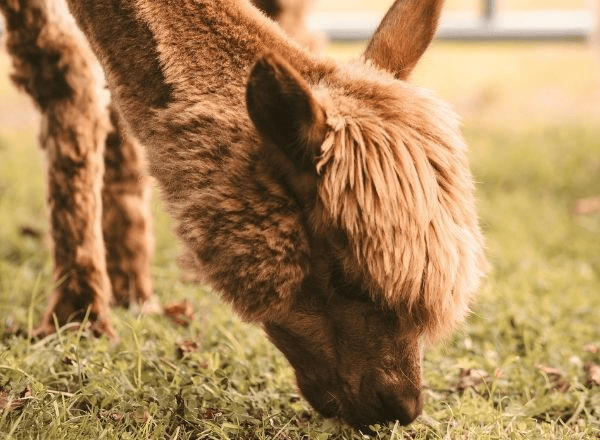
If approaching closely consistently gives them access to food, that outcome may reinforce the behavior. Calling them “dominant” would tell us much less about what is happening.
As caretakers, we have considerable influence over our animals’ environment and control over our own actions. That gives us opportunities to change what happens before a behavior and what follows it.
How do we change behavior?
Start by deciding exactly which behavior you want to understand or change. For example:
“My alpaca runs over, sticks her nose in my face and spits.”
That sentence contains several behaviors. You may decide that the behavior you want to focus on is simply: “My alpaca spits.”
Now you can observe what happens around that behavior:
- What happens immediately before she spits?
- What happens immediately after?
- What does she gain or avoid from spitting?
- What changes when she spits?
Breaking the situation down this way can help you see patterns you may have missed before. In a herd, spitting often results in another animal moving away. That animal might be a male making unwanted advances, a herd mate approaching food, or a youngster being weaned. Spitting at a person may have a similar effect: the person stops touching the animal or moves away.
So why does your alpaca spit at you? One possibility is that spitting makes you stop or leave.
There are times when necessary care means we cannot simply walk away. But there are also many opportunities to change our approach, reduce pressure, or accomplish the task differently.
I think of this as learning where the animal’s “buttons” are. To avoid pushing the spit button, the kick button, or the cush button, we first need to notice what happens immediately before the behavior.
Case study: The “terrible spitter”
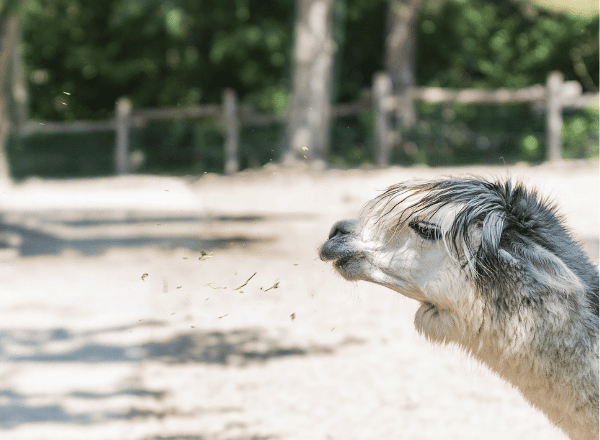
Many years ago, I worked with an alpaca owner who described the animal he brought to a workshop as a “terrible spitter.”
The alpaca stood quietly in the catch pen while I asked the owner about the problem: “What are you doing just before she spits at you?”
He replied: “Usually I am picking little bits of straw out of her fleece.”
Before I could stop myself, I said: “Why don’t you just not do that?” My answer sounded rather flippant, even to me. But the owner replied: “You know, I hadn’t thought of that!”
We discussed how necessary it was to remove the straw. When removing debris was needed, such as for show preparation, we explored other ways to do it with less stress.
Most importantly, the owner began to see his alpaca differently. She was no longer an unreasonable animal who was a “terrible spitter.” She was responding to a situation in a way that worked for her.
Ready to learn more?
Explore camelid behavior, handling, and training in Marty McGee Bennett’s comprehensive book, The Camelid Companion, or browse more articles for practical guidance.
Adapted from an article by Marty McGee Bennett, originally published in Alpacas Magazine, 2011.